
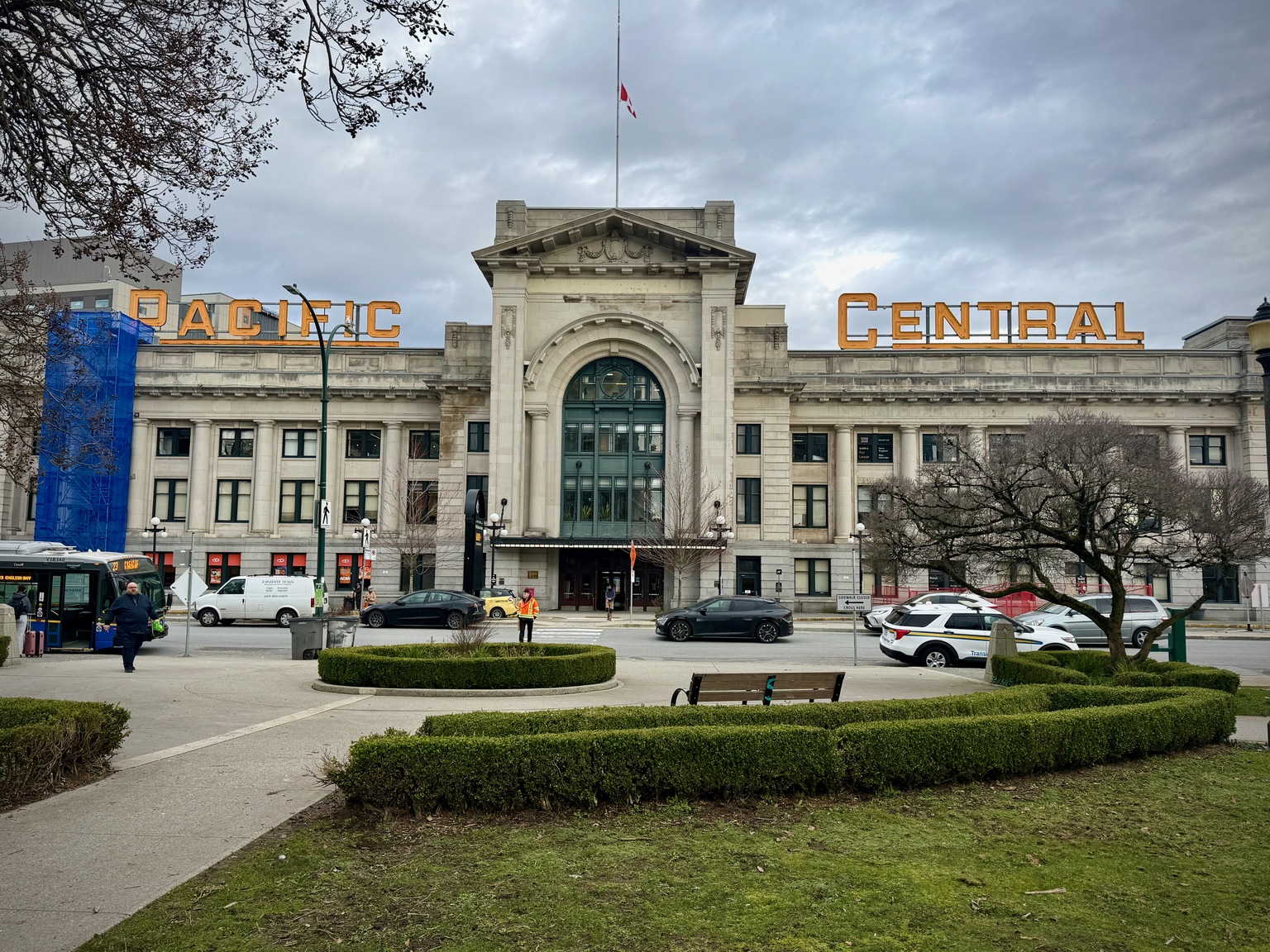
The ferry was the beginning, even though the train was the point.
We took a Lyft to the Kingston terminal, then Amtrak Cascades north. Three modes of transit before we had cleared our own state. That stacking would become a theme.
North by rail
We caught the ferry out of Kingston on the MV Spokane, which J.A. recognized before we even boarded. He grew up riding these boats. For me, ferries were a childhood treat, the kind of thing my family did as part of a small vacation to the wet side of the state.
Coach class on the Cascades is a quiet, productive place. No security theatre, no boarding groups, no elbows. J.A. had work to finish and finished it. I watched the Sound slide past on the left, grey-blue and unhurried. You can still be a CTO on a train. You just happen to also be moving.
The border was unremarkable, which is probably the highest compliment a border crossing can receive. You stop, have your passport inspected, and then the landscape shifted in that subtle way it does when you cross into BC: same trees, same rain, but the signage changes and the speed limits become metric, and something in your posture adjusts.
We arrived at Pacific Central in the early afternoon. The station felt almost too quiet for its size, the kind of building that holds its breath between departures.
New Westminster: capital once
We were staying in New Westminster because friends live there. That was the whole reason, and it turned out to be the right one.
What I did not know before this trip is that New West was the original capital of the Colony of British Columbia. Queen Victoria named it herself, after her favourite district in London. The Royal City, they called it. It held that title from 1859 until 1868, when the colonies merged and a vote in the Legislative Council handed the capital to Victoria. The story behind that vote involves a savvy parliamentarian named Helmcken, a nine-and-a-half-hour debate, and the kind of petty political manoeuvring that sounds remarkably contemporary. Small moments redirect entire geographies. They redirect lives, too.
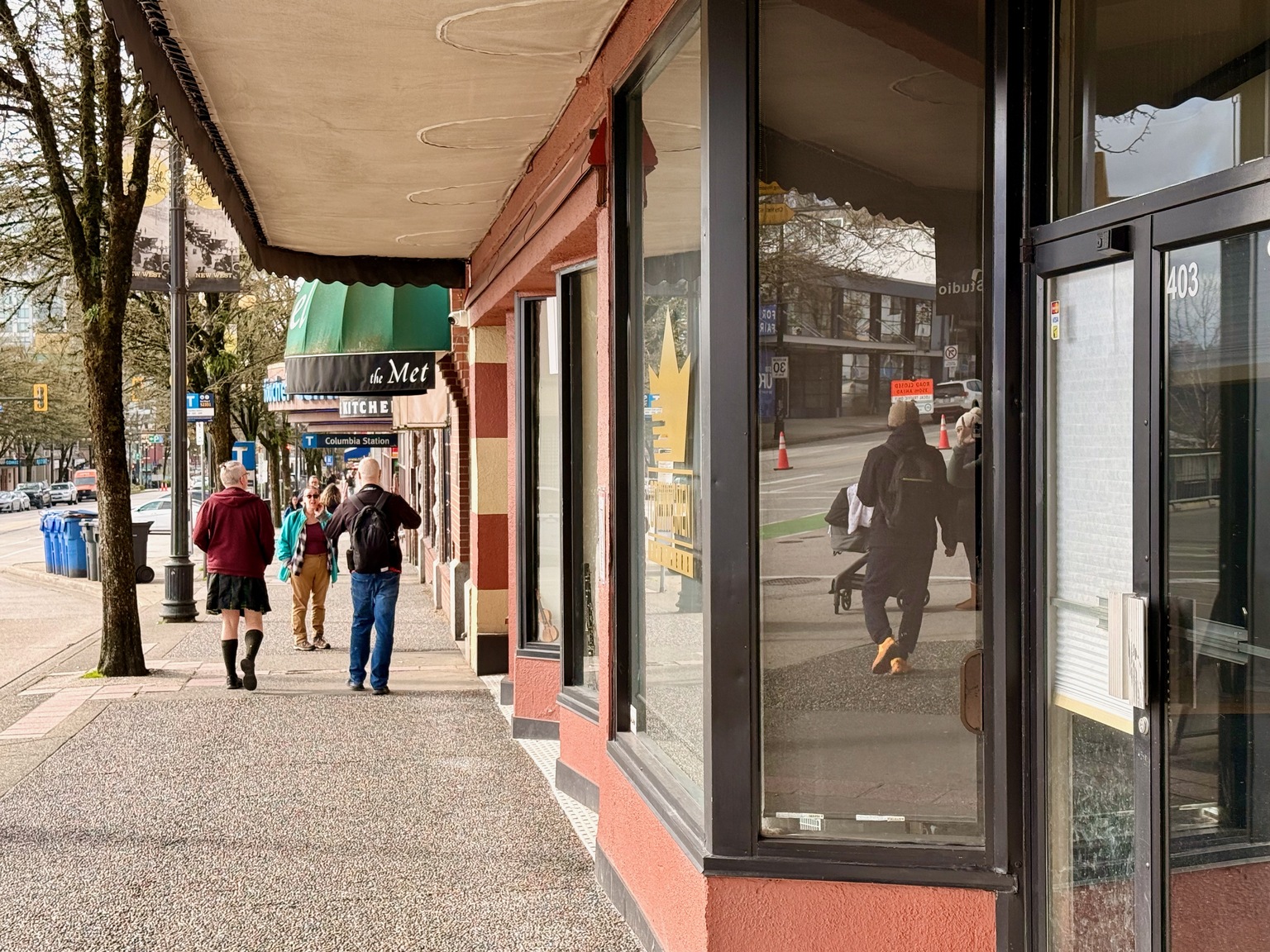
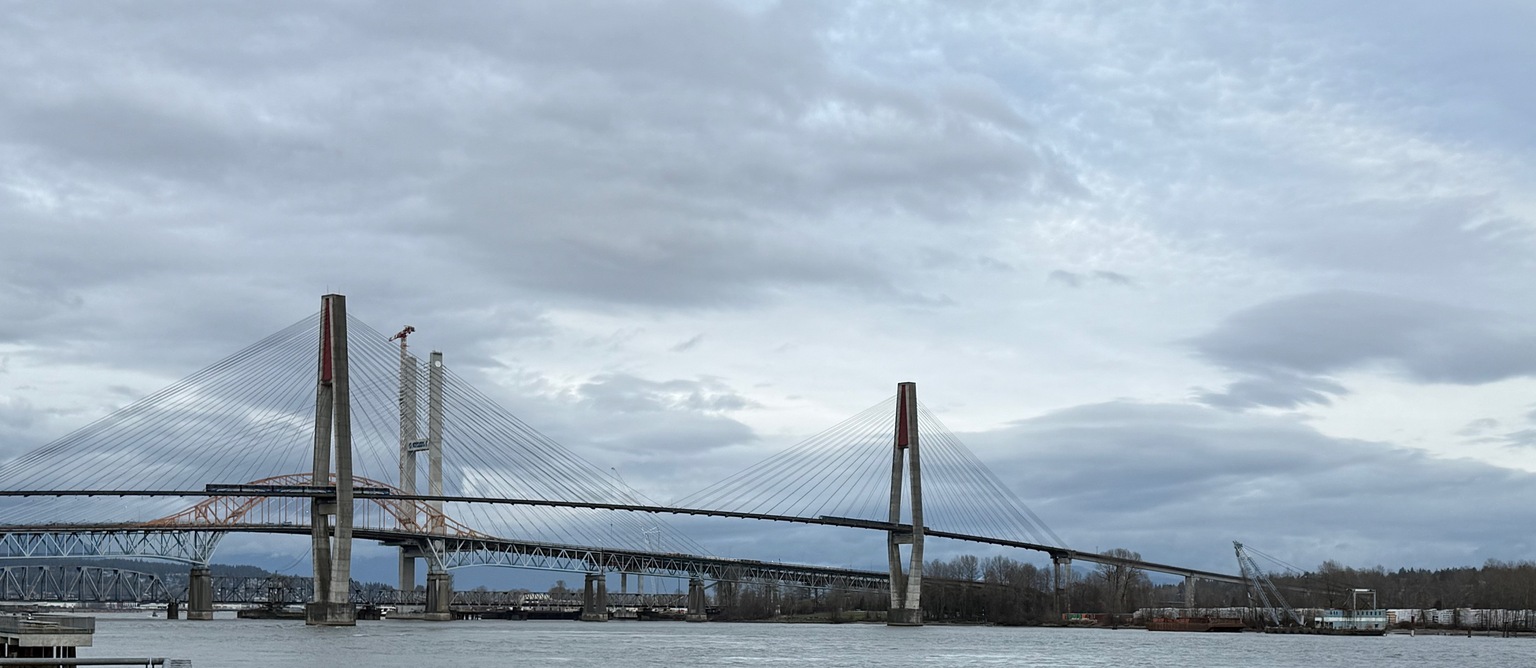
The city does not try to be Vancouver. It sits on the Fraser River, built up a series of hills, full of old brick and churches that predate the province. The riverfront has been redeveloped, and there is a quay park that sits nicely between the old city and the water. It feels lived in rather than curated, slightly stubborn in the best way. The kind of place where a former capital’s pride has settled into something quieter but not gone.
IRC to real life
The friends we stayed with are people J.A. has known since the 1990s, from Paramount’s IRC server. We played Star Trek games together, the text-based kind where the interface was a command line and the social layer was entirely typed. Two of us became lifelong software engineers. All of us became lifelong friends.
There is something about online friendships from that era that I find quietly remarkable. No algorithms. No feeds. Just people who chose to spend time in the same digital room and kept choosing to, across decades and countries and careers. We are in our forties now. We have mortgages and opinions about RAM prices. The friendship has not dimmed. It has just become the kind of thing you maintain across distance, with visits that are less frequent than you would like and more meaningful than you expect.
We talked about work, mostly. Tech conversations between people who have been in the industry long enough to have strong preferences and the good sense not to argue about them too loudly. The texture matters more than the transcript.
I am not sure when we will see them again. That is one of the quiet costs of a year like this. Travel expands the geography of your life and thins the frequency of everything inside it.
The hill
Our hotel, The Met, was downhill from our friends’ place. We checked in, then we walked uphill to our friends’ place.
The climb was not long, but it was honest.
J.A. noticed his shoulder, the one he injured cycling a few years ago, reminding him it had an opinion about the grade. He had been recovering from pneumonia not that many weeks earlier, and the fact that he was walking uphill at all felt like a small victory worth noting quietly rather than celebrating loudly. We are both still capable. We are just more aware of the machinery now.
SkyTrain
This was M.E.’s first time on the SkyTrain. J.A. had ridden it before, so I got the benefit of someone who already knew the system while I played the role of the tourist.
It is automated, driverless, and if you sit at the very front of the lead car you get an unobstructed view of the track ahead. J.A. liked it immediately. The engineer in him responds to systems that work cleanly, and the SkyTrain works cleanly. It is elevated above street traffic, which gives it a coherence that ground-level light rail often lacks. Clean stations. Logical transfers. One station has platform doors on both sides, which means that if you realize you are headed the wrong direction, you can just step across to the opposite platform without going through any turnstiles. A small design kindness that most systems do not bother with.
Granville Island: almost too charming
We took the SkyTrain into Vancouver and made our way to Granville Island on a day when the crowds were moderate and the weather was cooperating.
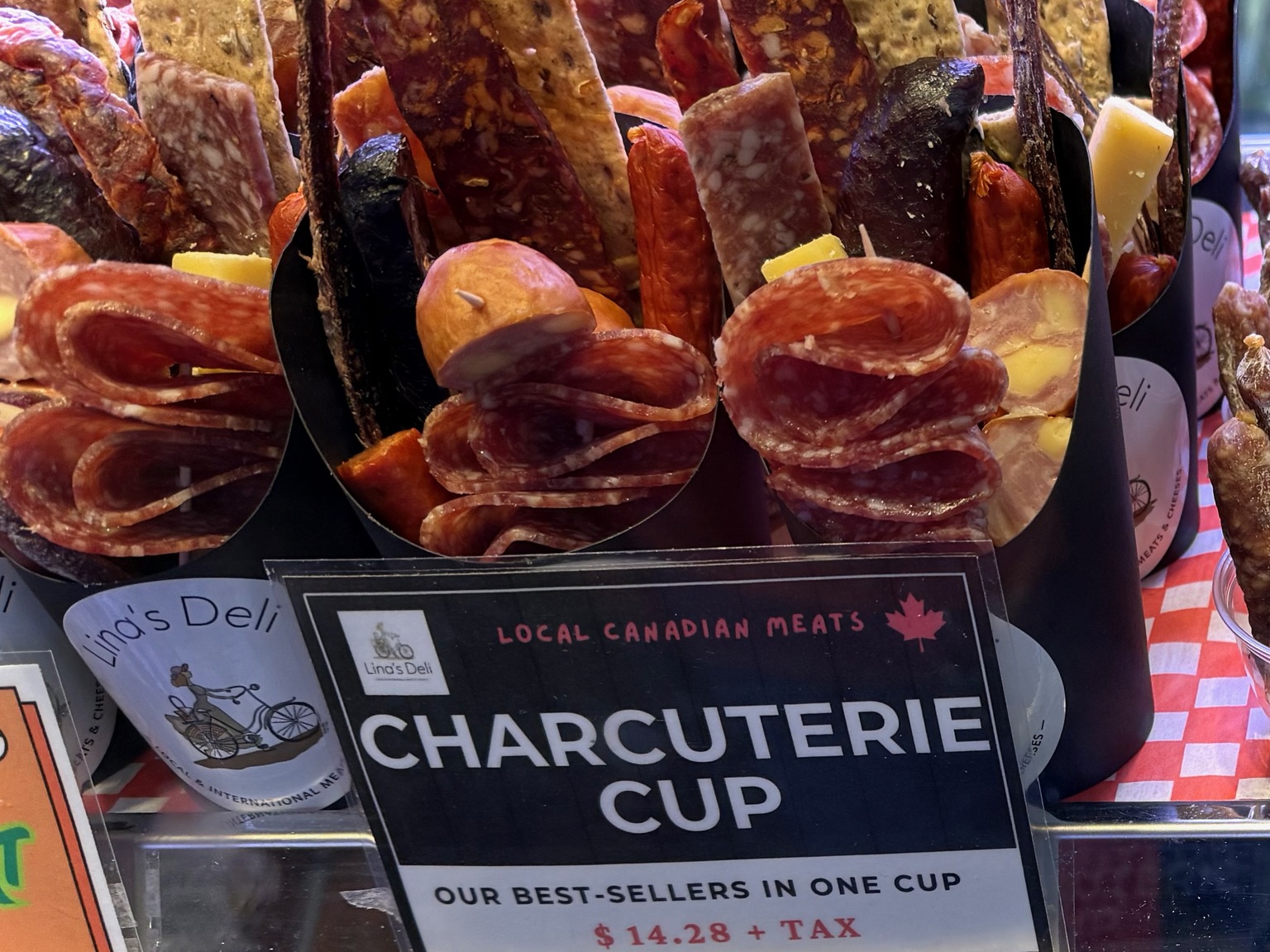
The market is good. It knows it is good, and it manages not to be insufferable about it. Pyramid stacks of fruit, tidy rows of cheese, vendors who will hand you a shot glass of cured meat and let you decide for yourself.
We ate Mexican food inside the market, which felt like a mildly questionable decision until it turned out to be solid. The fibre shops had low inventory, which I took as a good sign. A place that is not aggressively restocking its artisan wool is a place that has not fully surrendered to the gift-shop economy.
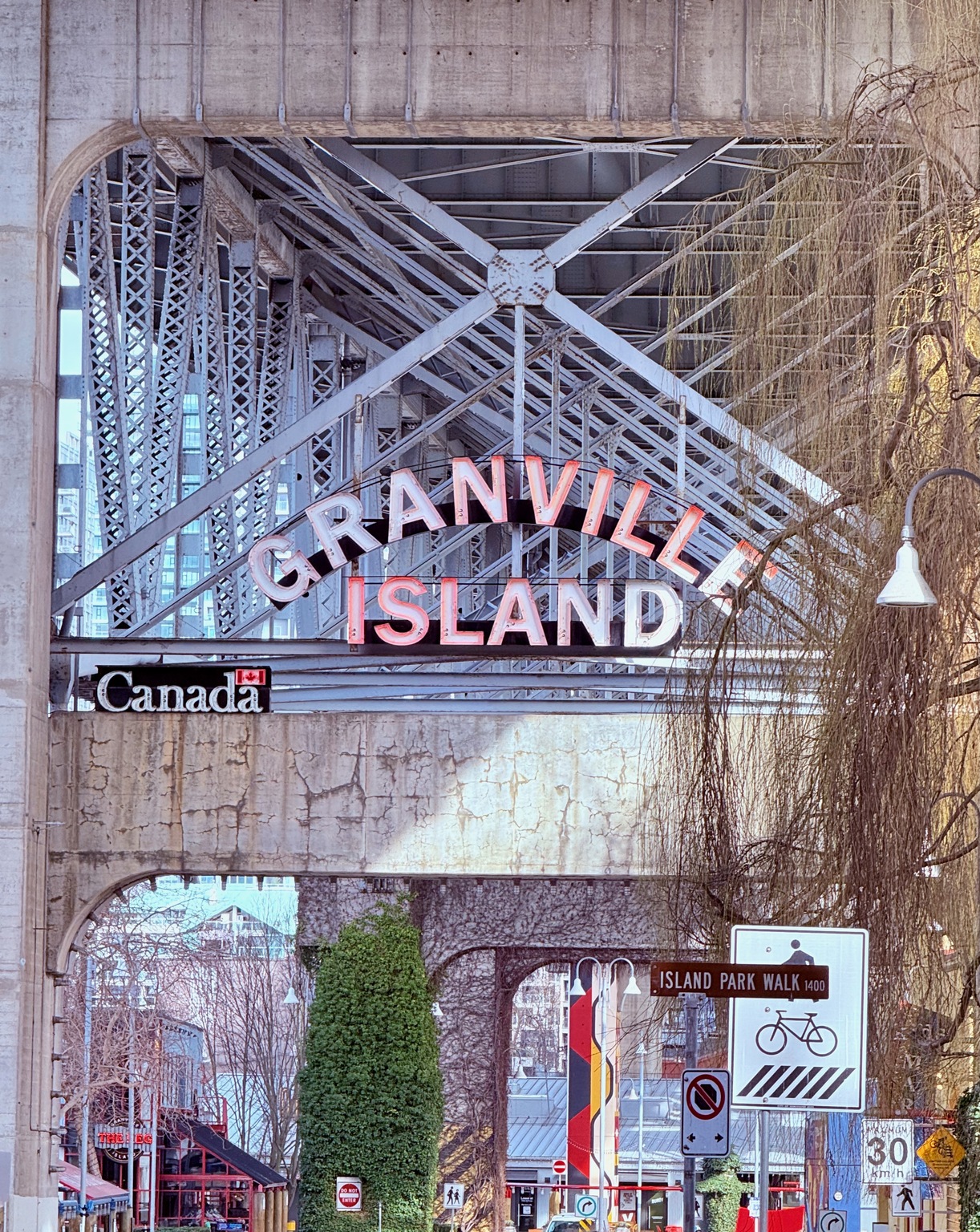
Down at the water, the tiny False Creek ferries and the Aquabus shuttled back and forth, little boats making small crossings inside a city. It felt like a microcosm of our own year: movement layered on movement, each leg shorter than the last, and every one of them slightly charming.
First country, not new
Canada was the first country of our trip, but it was not a new one. That distinction matters.
We needed a psychological ramp before the Philippines, and Vancouver gave us exactly that. Familiar but foreign. The same language, mostly the same cultural grammar, but enough difference to make you feel like you have gone somewhere. The currency is different. The milk comes in bags in some provinces. The SkyTrain is better. You are away.
Looking back, the whole visit was a stack of transit modes: Lyft to ferry to train to SkyTrain to walking to tiny ferries at Granville Island and back again. That is very us. Infrastructure as narrative. The way you move through a place tells you something about the place, and it tells you something about yourself.
Mud flats at dusk
The Amtrak home was the reverse of the Amtrak up, but the light was different.
We caught the return at the end of the day, and somewhere south of the border the tide was out and the sun was low and the mud flats along the Sound were glowing. Wide sky, low water, that particular golden-hour light that turns everything into a painting you would not believe if someone showed it to you in a gallery. My own face reflected faintly in the window glass, overlaid on the landscape like a double exposure.
The continent was behind us. Not yet left, but already loosening.
There is something about being even slightly elsewhere that confirms what J.A. and I already suspected about ourselves: we are better when we are moving. Not frantic, not running. Just pointed somewhere, with enough momentum to keep the world interesting and enough stillness to notice what we are passing through.
The mud flats held the light a long time. We watched until they did not.
- The Macs