
Trying everything
If you’ve been following our journey so far, you probably know that John approaches food as something to be tested, not avoided. For years, I’ve watched those shows with him, aware that his curiosity was not going to stay theoretical.
I was wary of his insistence on trying everything, knowing that it would mean him asking me to try foods I had already decided against. To begin with, I avoid fish and most seafood. John disapproves of my “If it comes from the sea, let it be” standard. Deciding on Southeast Asia as our starting point sharpened that hesitation. I knew from all those food shows that fish features heavily in the food here. In the Philippines, I tried to adapt, but I stayed with what I already knew.
One of our first activities in Kuala Lumpur was a food tour with tastings beginning at the Chow Kit Night Market. I knew what this would involve as I knew there was bound to be fish and the dreaded fruit on those YouTube videos: durian. John was set on it. He told me I did not have to like everything, only try a bite, so I agreed to try.
Produce
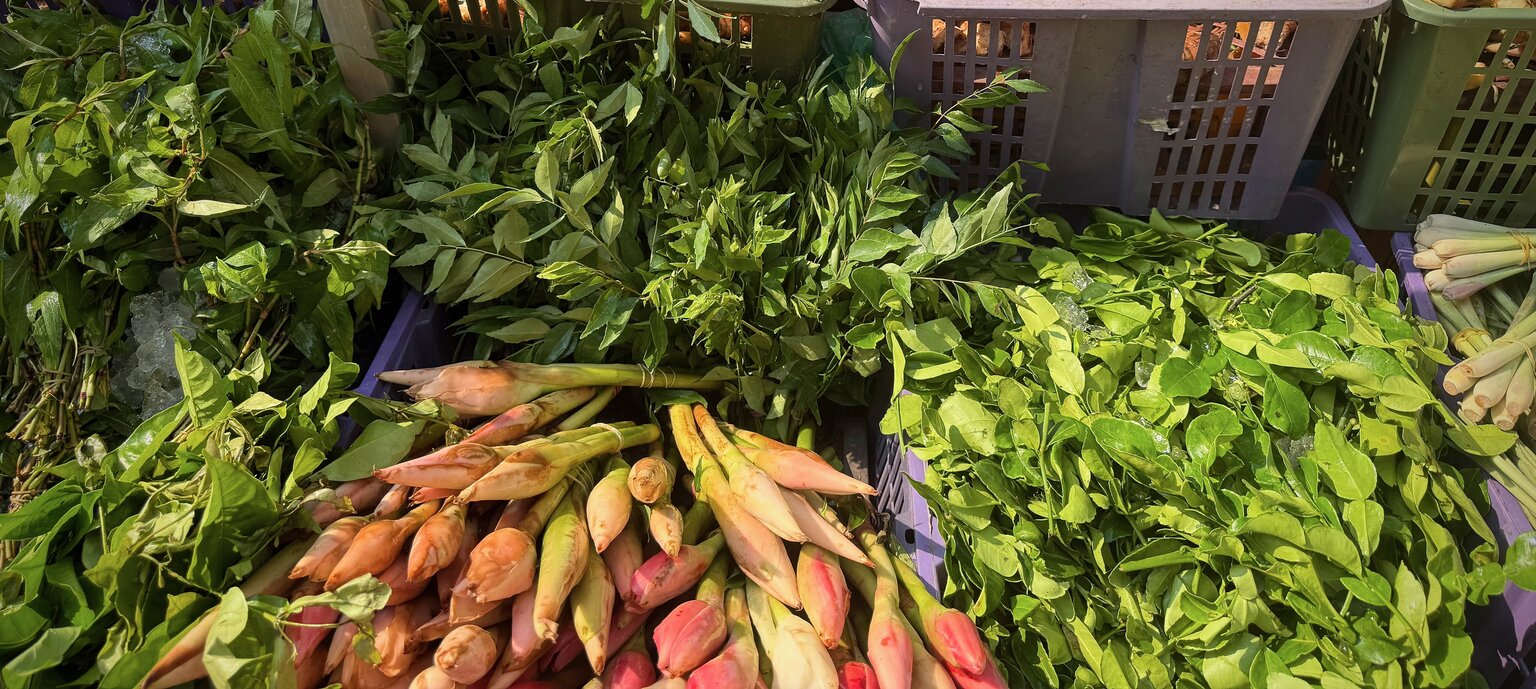
We moved into the market with our guide. Our first stop was to identify the produce behind Malaysian flavors. Pandan and lemongrass came first. Pandan is a leafy tropical plant used across Southeast Asia, with a lightly grassy, slightly sweet flavor found in both savory and sweet dishes. At the same stand, we were shown ginger, galangal, and turmeric roots.
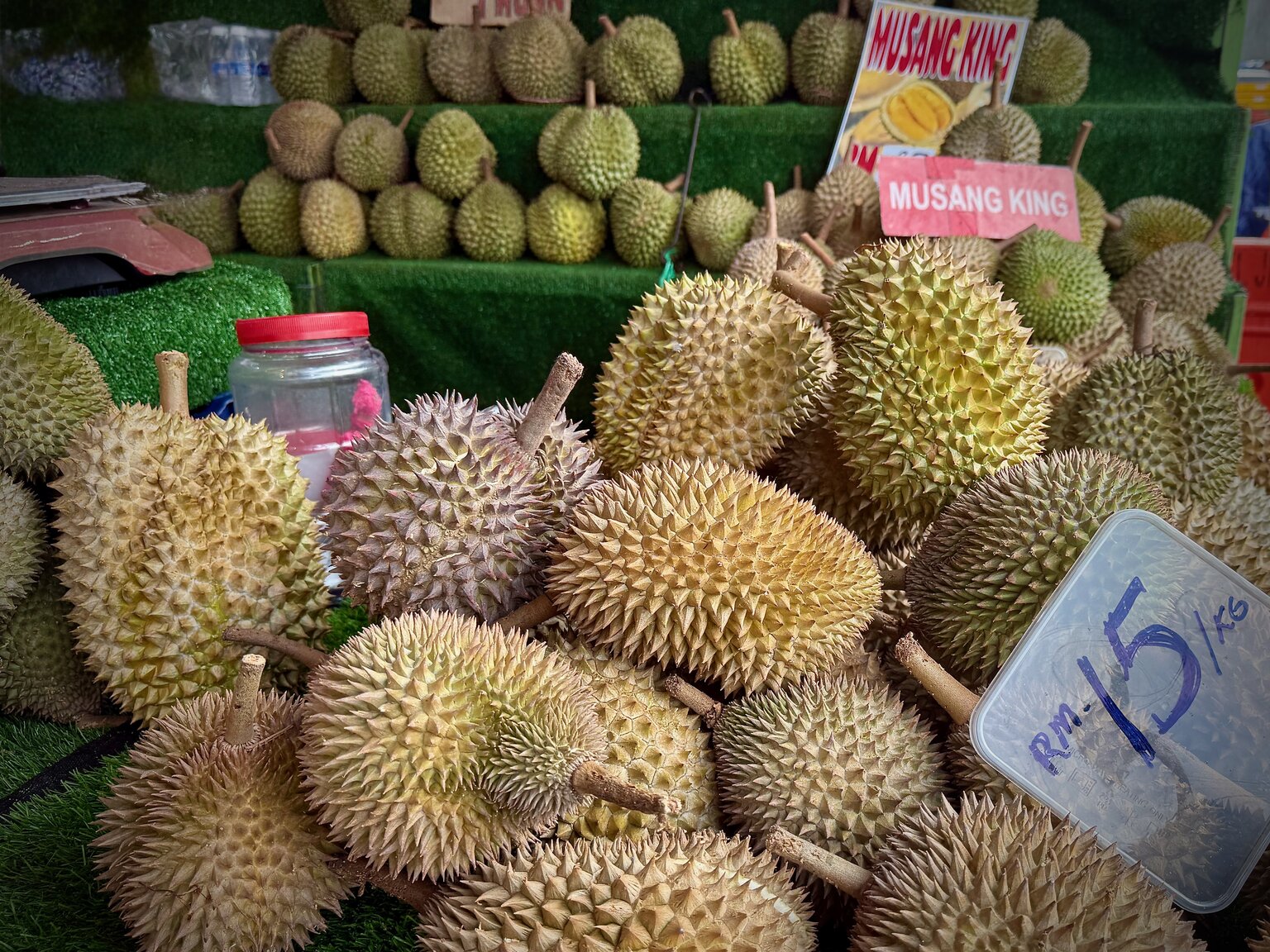
A row of stands carried a distinct aroma. Rain started in earnest, so we kept moving. When we sprinted into a covered, air conditioned stall, we found what we had been smelling: the “king of fruits.” I had been preparing for this. John was excited to try the fruit. There were four types of durian and a group of people chopping them, pulling out the flesh, and packaging it for sale. All I could think was, “I thought this was supposed to be horribly stinky and a divisive fruit.”
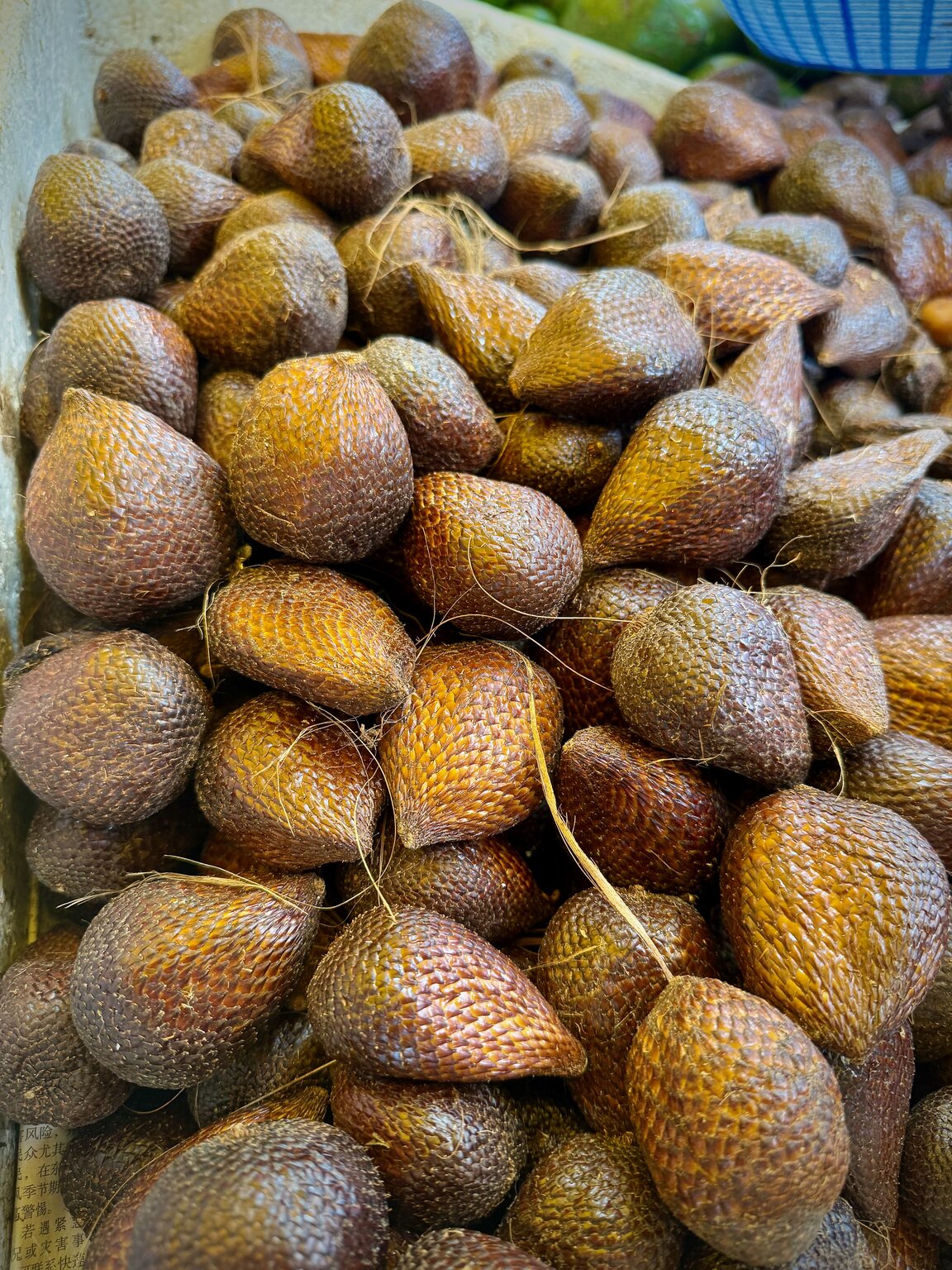
We sat down for a fruit tasting session. Our guide introduced each fruit, showed us how to open them and had us try each one. We began with lychee which was familiar. Rambutan and longan (dragon’s eye) were similar to the lychee. These were enjoyable, mild fruits. Then the guide pulled out snake skin fruit. The skin looks and feels like snake skin. The appearance made me hesitate. The flesh is mildly sweet, somewhere between apple and pineapple. The fruit is firmer than the others. You pull the flesh off the seed and eat the slightly crunchy flesh. John had discovered his new favorite fruit.
Then, after the other fruit, our guide handed each of us a plastic glove and pulled out a container of fresh durian. This was the moment of truth. Some of the others in the group were confused by the plastic glove. John was excited, so I filmed him first. One person declined, saying he had tasted it before and once was enough. The fruit is creamy and slightly sweet. It was unremarkable and neither worthy of love nor hate. I have an aversion to soft, slippery textures and this was on the edge of that, so not my favorite. Afterward, we compared notes. There is a clear scent that signals durian and both of us were surprised that the flavor wasn’t more pronounced. I was left ambivalent.
Malaysian Indian Food
Everywhere I have gone in Kuala Lumpur, Malaysians describe their country as made up of three cultures: Malay, Indian, and Chinese. A doctor, a Grab driver, and a tour guide all repeat it. It is treated as a point of pride. People take pride in a society that brings together cultural, ethnic, linguistic, and culinary traditions. Christian churches, Buddhist temples, and other places of worship appear across the city.
We began our journey through Malaysian dishes with Mee goreng mamak (spicy fried noodles) often sold by Muslim Indian communities. Personally, I don’t think you can go wrong with a fried noodle dish.
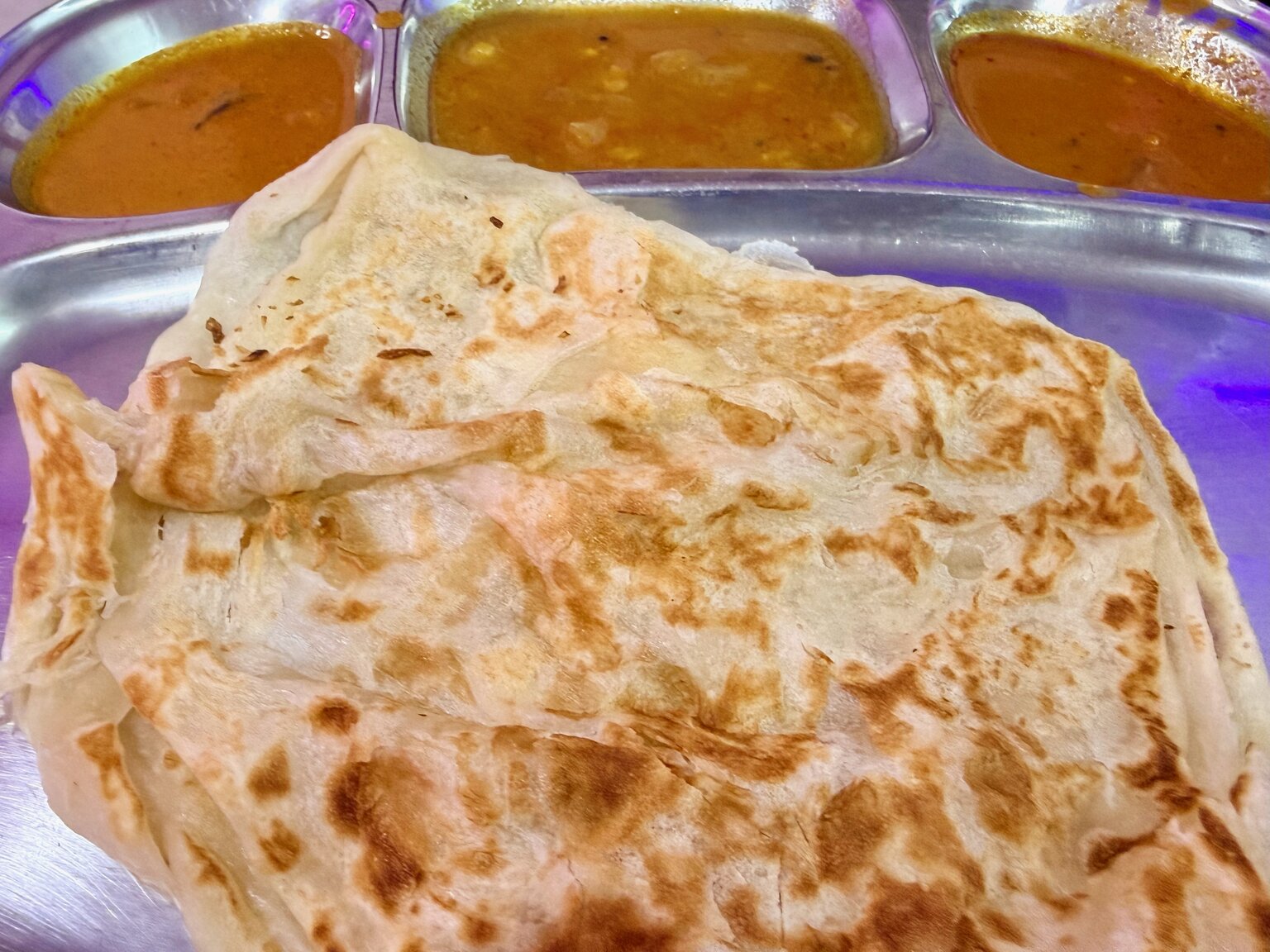
Roti Canai was the next Indian food we tried. We watched a chef stretch and shape the roti dough while dipping his hands in ghee. We each took a turn. The grand finale was eating our roti with three curries: chicken, fish, and dhal. This stood out. The chicken and fish curries were my favorite. They were rich and the roti carried the curries well.
Malaysian and Indonesian Food
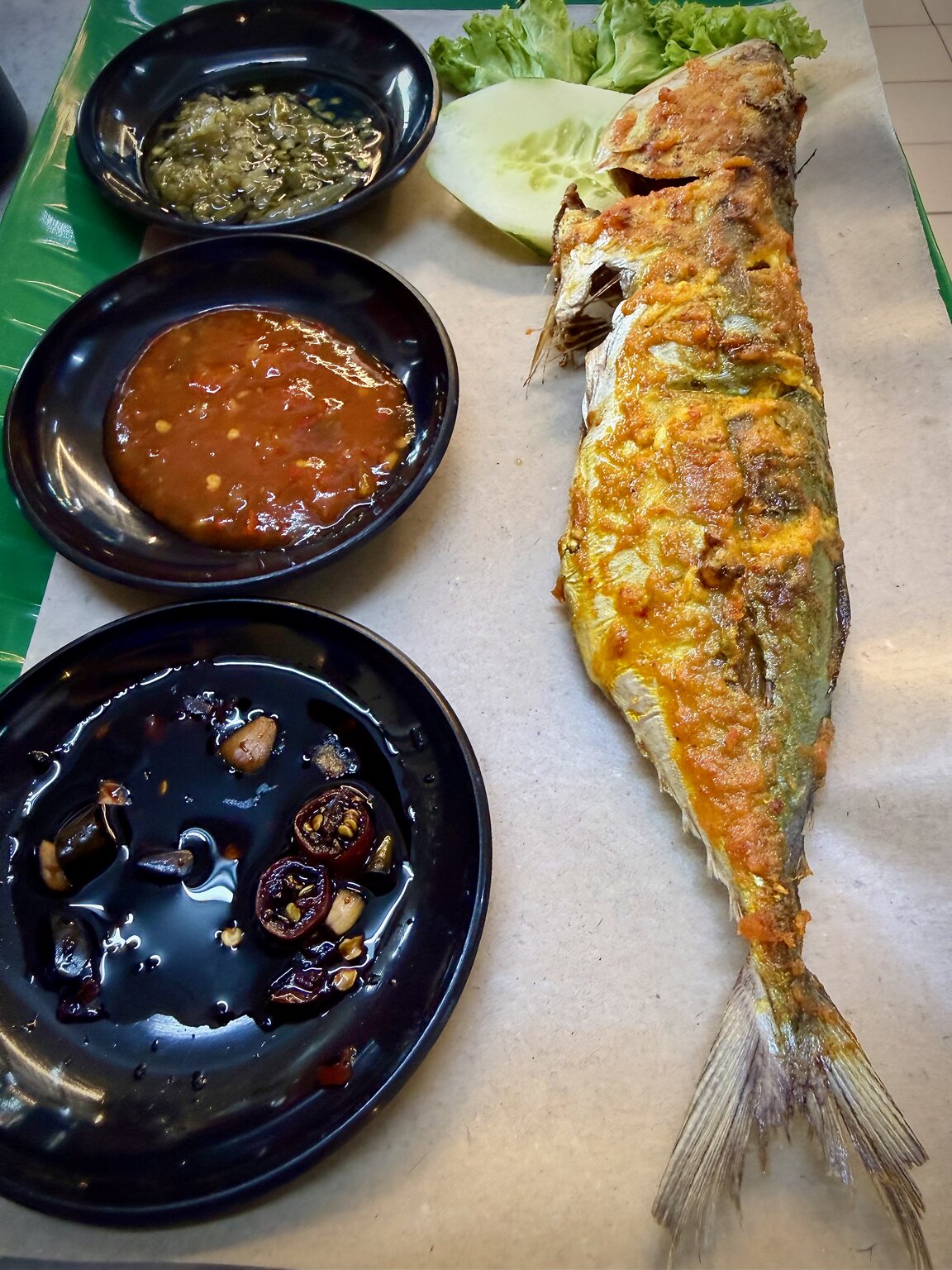
Mie Ayam is an Indonesian dish with wheat noodles and chicken. The dish reflects Chinese cooking methods seen across Indonesian and Malaysian food. The restaurant we went to was serving a family recipe. At the same stop, we tried some Sate Ayam Padang. Ayam means chicken in Malay and it was one of the first words we learned. We tried these to compare Indonesian and Malaysian versions. As we entered, the staff were grilling whole mackerel. Eating a whole grilled fish was one of those things I had been dreading. I went through with it and told myself what I used to tell my students, “I can do hard things.” The mackerel was delicious, juicy, and well prepared. I was already full, so I only had a few bites.
Nasi Lemak is the national dish of Malaysia. The rice is cooked in coconut milk and flavored with herbs, including pandan. This rice is accompanied by sambal (spicy chili paste), fried anchovies, roasted peanuts, an egg, and thin crispy fish crackers called keropok keping. Malaysian dishes are often served wrapped in or on a banana leaf. Each component is placed separately. The components are then mixed thoroughly so they are distributed throughout the dish. John did not tell me what the crackers were at first. He waited to see my reaction, then told me. The fried anchovies at this restaurant were a bit much for me, but I have had this dish several times in Kuala Lumpur. I am not a fan of eating the fish crackers on their own, but they add texture and flavor when mixed in.
Smaller Bites and Drinks
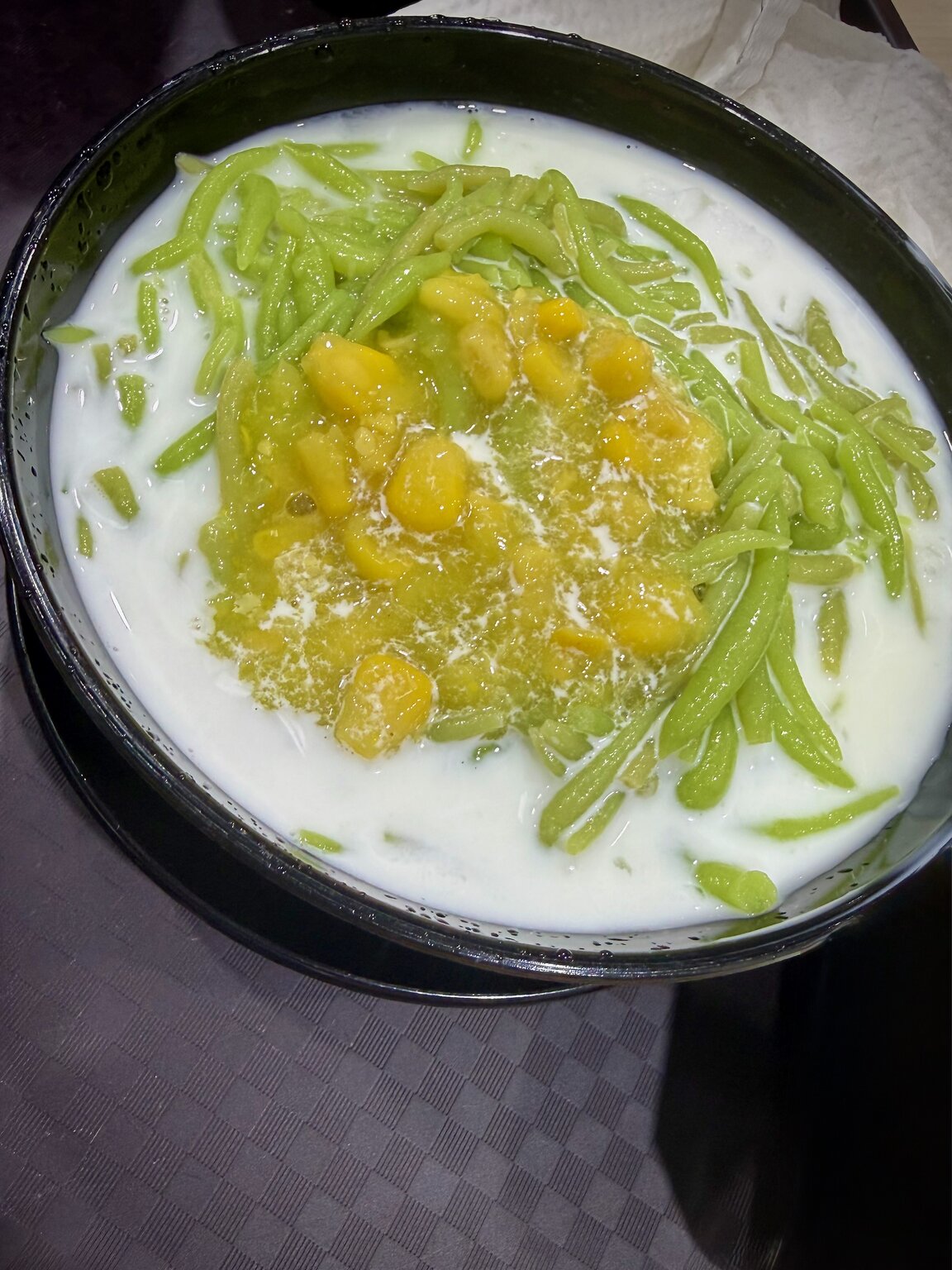
Along with our fruit tasting, we were introduced to cendol. Cendol is built on a base of palm sugar. Ice, coconut milk, and pandan jelly noodles are added. The cendol we enjoyed on the food tour was just these simple ingredients. Other versions include red beans, corn, durian, and more. The sweet, cold, creamy treat is easy to keep going back to. We only get cendol if we walk for it. Many days start with a plan to go get cendol. We have enjoyed this treat at more tourist-oriented places with additional toppings, but the simplicity of the one in the market is the gold standard for both of us.
As we walked between restaurants, our guide also introduced us to small vendors each focused on one item. One of my favorites was the Pisang Goreng (banana fritters). Thin slices of banana are battered and fried. Warm and sweet inside, crisp on the outside, it’s everything I want in a dessert.
Next were chicken and beef sate skewers. We preferred the Malaysian sate to the Indonesian version, which pleased our guide. We finished with a mango smoothie, a cool break after the humid walk and rich food.
Final Thoughts on Food Tours
This was an effective way to begin our time in Malaysia. It allowed us to get our bearings in the city. We saw how close the market was to our Airbnb. We learned how to move through the area for food and became familiar with vendors in the market. This tour also gave us the opportunity to try a range of dishes and learn the context behind them. Throughout our stay, we would walk to the market and beyond. It became part of our routine in the evening. We became more familiar with Malaysian food. The Malay words became recognizable and we began to recognize foods on menus. We plan to continue taking tours like this as we feel it pushed us outside our comfort zones and deepened our understanding of Malaysian food.
The Macs