
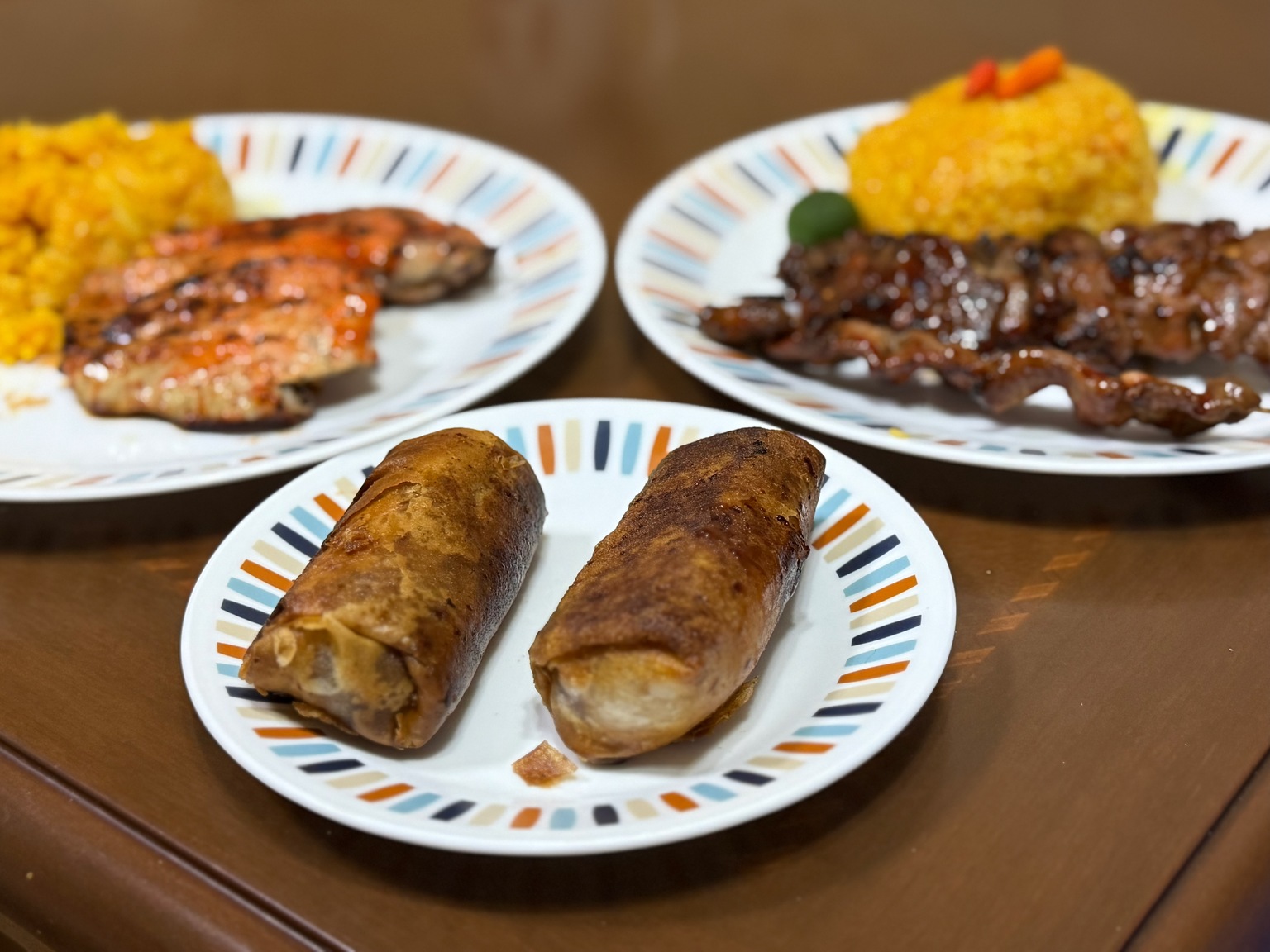
The first week in a new place is rarely about the place itself. It is about friction.
The friction is not the dramatic kind. It involves smaller things. We have to figure out where to buy laundry soap, how to cross the street, and whether we can make breakfast with what we have. I quietly realise that staying somewhere, even briefly, is different from passing through it.
Making a temporary home
We’re not in a hotel. That changes everything.
Our Airbnb is small, but it’s set up for living rather than visiting. There is a washing machine, a small refrigerator, a hot plate, an electric kettle, a rice maker, plates, utensils, and a few pots. Enough to make simple meals and to avoid eating every meal out, if we choose to.
There is also no hot water.
That lands somewhere between inconvenience and adjustment. It becomes part of the rhythm of the day, something we plan around without quite noticing when that shift happens.
Living, even temporarily, creates a different kind of attention. We’re not just looking at a place. We’re fitting ourselves into it.
The walk to the grocery store
The closest grocery store is about 750 metres away, about half a mile. Downhill, so it’s uphill on the way back with groceries.
On paper, that’s nothing. In practice, it’s a short stretch that demands attention. The street is busy with motorbikes, cars, motorised tricycles, and tricycles powered by foot. There’s no clear separation between where vehicles belong and where people walk, at least on the streets near us. Everyone shares the same space.
The first walk feels uncertain. I am aware of every movement, every sound, every near miss that is not actually a near miss. I am trying to understand the rules, except there don’t seem to be any.
By the time I began walking further, out to about 1.5 kilometres, something shifted. Not in the street, but in how I move through it.
Traffic as a kind of choreography
At first, the traffic sounds like noise. Constant honking, engines, movement in all directions.
After a few days, it resolves into something more structured.
The horns are not expressions of frustration. They are signals. A way of saying, “I am here,” especially from motorbikes that can appear suddenly and pass close. The sound becomes informational rather than aggressive.
The movement of traffic itself has a kind of fluid logic. Drivers go where they need to go, and the rest of the traffic adjusts. When a left turn is difficult, a driver will edge slowly into the flow. Oncoming vehicles shift just enough to allow it. Sometimes several cars pass through in this way before the flow closes again and continues.
It’s not ordered in the way we’re used to, but it’s not random either. It seems to work, at least in this part of the city, because everyone is paying attention and responding in real time.
Once I begin to see that, the street stops feeling chaotic.
Learning to cross
Crossing a larger street is the part that feels most exposed at the beginning.
The process becomes simple, but not easy at first. I start when my side is clear. I move as far as I can. I stop. I wait. I move again. I don’t rush, but I don’t hesitate once I commit.
It helps to watch others. Even more, it helps to move with them. I follow the pace of people who already understand how this works. After a few crossings, I’m no longer thinking through each step.
The awareness stays, but the hesitation fades.
By the end of the week, I step into the street, read the movement, and cross without the same internal negotiation that happened on the first attempt.
The first grocery shop
The first trip to the grocery store is part necessity, part exploration.
We need the practical things first. Laundry soap. Sponges. Cleaners. The quiet infrastructure of daily life. These are the items that turn a temporary stay into something more functional.
Then there is the slower pass through the aisles. What is available. What is prominent. What is inexpensive. What is everywhere, and what is rare. We begin to see what people here actually buy and eat, not what is presented to visitors.
J.A. has a long-standing routine that travels with him. Peanut butter sandwiches with something sweet and small bananas for lunch, and muesli for breakfast, if it can be found. The search for these becomes part of the first shop.
This week’s local variation involves calamansi jelly, which turns out to work surprisingly well.
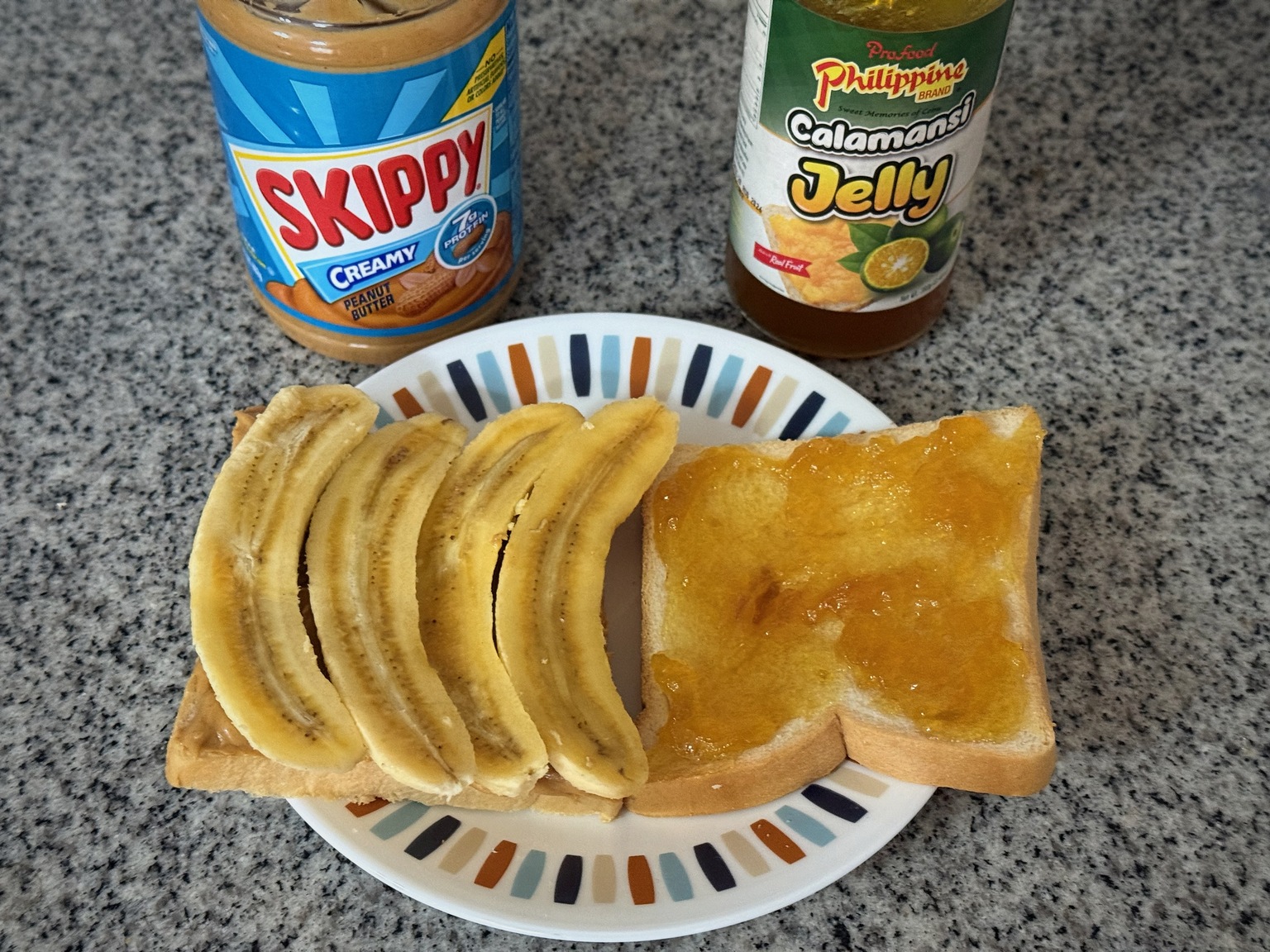
The bananas matter more than we would expect. Not the large Cavendish bananas we are used to, but the smaller local varieties. He tries them all, quietly comparing them. There is no announcement of results, just a steady process of evaluation. He’s done this with every new banana for 30 years.
It turns out that even something as simple as a banana can shift slightly from one place to another. Sweeter, softer, different in ways that are small but noticeable if we are paying attention.
Eating in and eating out
We’ve used the small kitchen, but not extensively.
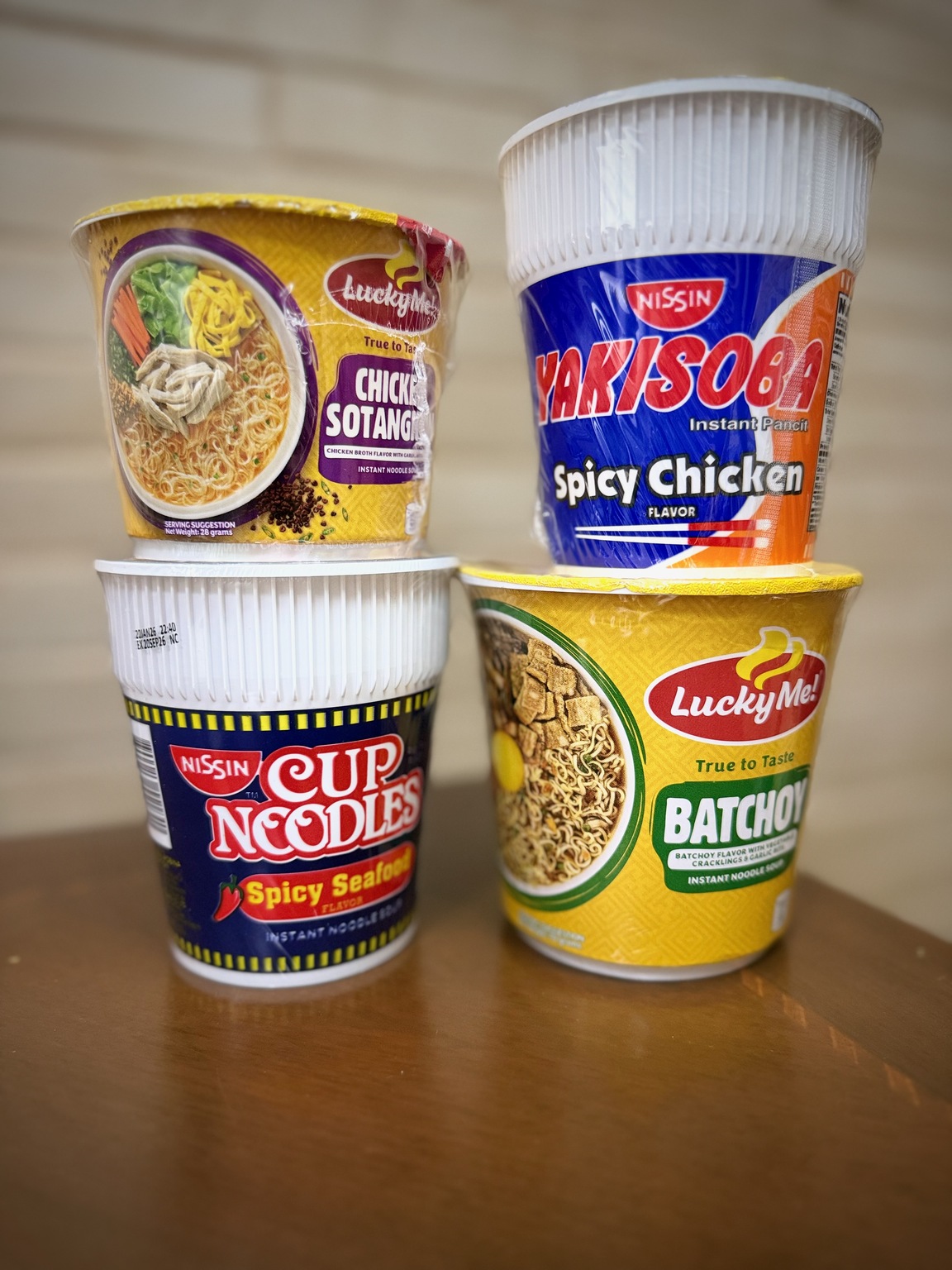
Instant cup noodles and yakisoba are everywhere, from the grocery store to the 7-Eleven down the street. They become an easy fallback, especially on days when we have walked further than expected or simply do not feel like assembling a meal from scratch.
At the same time, trying new food is part of the point of being here.
We’ve been ordering in and going out, choosing things that are familiar enough to approach but different enough to feel like exploration. For J.A., this comes naturally. He’s spent years watching food videos focused on East and Southeast Asia and arrives with a mental list already forming.
This has turned into a small ongoing project: “Things John Decided to Eat.” A series of videos documenting those choices. There is a calmness to his approach that suggests very little will surprise him.
I’m participating as well, though not always on camera. Some things are easier to try without an audience.
The errands we do not think about
Staying longer than a few days means dealing with the ordinary things that are easy to ignore on shorter trips.
Prescriptions need to be refilled. A haircut becomes necessary. A beard trim, in J.A.’s case, is not optional. Reading glasses get damaged somewhere between packing and unpacking and need to be replaced.
There is a steady list of small requirements: soap that works for us, toothpaste we recognise or are willing to switch to, beard oil, and other items that were either left behind or have run out.
None of these are difficult on their own. Together, they form a kind of background task list that runs alongside everything else. This is what living somewhere looks like, even temporarily.
We’re not just experiencing a place. We’re maintaining ourselves within it.
From hesitation to rhythm
At the beginning of the week, everything requires attention.
Walking the street, crossing the road, choosing what to buy, deciding where to go. Each action carries a small layer of uncertainty.
By the end of the week, that layer has thinned.
The street that felt unpredictable begins to feel readable. The grocery store becomes familiar enough that we know where to find what we need. The walk that required focus becomes something we can do while thinking about something else.
Nothing about the city has simplified. The change is in how we move through it.